
Grąžina atskiro nario binominio pasiskirstymo tikimybę. Naudokite BINOMDIST problemoms su fiksuotu bandymų skaičiumi, kur bandymo rezultatai gali būti tik sėkmė arba nesėkmė, bandymai yra nepriklausomi ir sėkmės tikimybė eksperimento metu išlieka pastovi. Pavyzdžiui, BINOMDIST gali suskaičiuoti tikimybę, kad du iš trijų gimusių vaikų bus vyriškos lyties.
Sintaksė
BINOMDIST(number_s;bandymai;probability_s;kaupiamieji)
Number_s yra sėkmingų bandymų skaičius.
Bandymai yra nepriklausomų bandymų skaičius.
Probability_s yra kiekvieno bandymo sėkmės tikimybė.
Loginė reikšmė, kuri nustato funkcijos formą. Jei sukauptoji yra TRUE, BINOMDIST grąžina sukauptąją pasiskirstymo funkciją, kuri yra tikimybė, kad buvo ne daugiau kaip number_s sėkmių; Jeigu FALSE, ji grąžina tikimybės masės funkciją, kuri yra tikimybė, kad buvo lygiai number_s sėkmių.
Pastabos
P_į_skaičius ir bandymai yra paverčiami sveikais skaičiais, pašalinant trupmeninę dalį.
Jei number_s, bandymai arba probability_s nėra skaičius, BINOMDIST grąžina #VALUE! klaidos reikšmę.
Jei number_s < 0 ar number_s > bandymų, BINOMDIST grąžina #NUM! klaidos reikšmę.
Jei probability_s < 0 arba probability_s > 1, BINOMDIST grąžina #NUM! klaidos reikšmę.
Binominė tikimybės masės funkcija yra:

čia:

yra COMBIN(n,x).Pastaba
Čia naudojama funkcija COMBIN iliustruojant funkcijos BINOMDIST naudojamą matematinę formulę. Tai nėra funkcija, kurią galite naudoti sąraše.
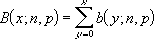
Kumuliacinis binominis skirstinys yra:
Pavyzdys
| P_į_skaičius | Bandymai | P_į_tikimybė | Formulė | Aprašas (rezultatas) |
|---|---|---|---|---|
| 6 | 10 | 0,5 | =BINOMDIST([number_s],[bandymai],[probability_s],FALSE) | Tikimybė, kad lygiai 6 bandymai iš 10-ies bus sėkmingi (0,205078) |