
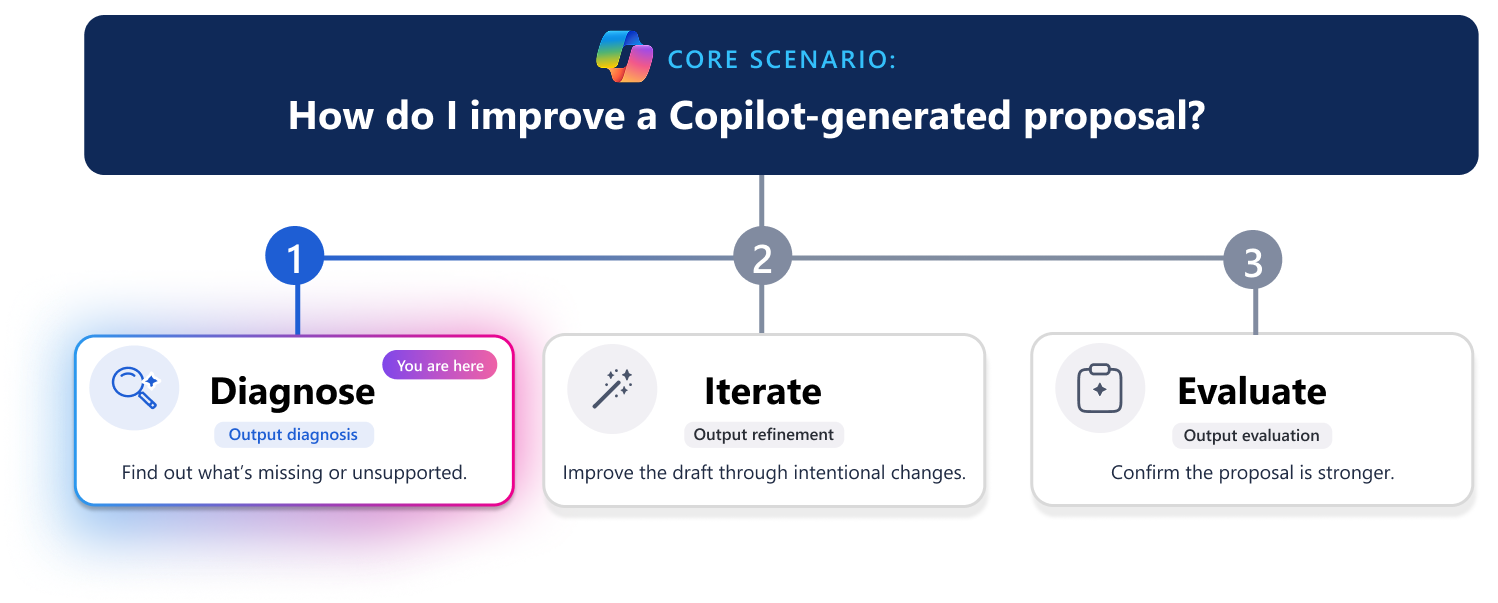
Microsoft 365 Copilot can generate a polished first draft, but polished doesn't mean complete. Diagnosing helps you identify missing, unclear, unsupported, or outdated information before revising.
In this scenario, you'll review a Copilot-generated proposal and identify key gaps before moving on to improving it by iteration.
Scenario: Review a Copilot-generated proposal draft before changing it
You’re preparing a proposal for executive stakeholders about automating weekly status reporting across several teams. Today, managers collect updates manually, reporting formats vary, and leaders lack a consistent view of risks, delays, and ownership.
The proposal recommends a small pilot before broader rollout. You use Microsoft 365 Copilot to draft the proposal from planning notes, sample reports, team feedback, rollout plans, and time-savings estimates.
At first glance, the proposal appears complete. But polished language can hide important gaps. Some claims are overstated, risks and ownership are unclear, and parts of the timeline might be outdated. Before revising, diagnose where the draft falls short and focus on what matters most.
How do I apply diagnosis criteria to the proposal draft?
As you review the weekly status reporting proposal, you can use the following criteria to identify what is missing, unclear, or difficult for an executive to act on.

- Decisions: Are decisions clearly separated from discussions?
- Risks: Are blockers, tradeoffs, or uncertainties visible?
- Context: Would someone outside the discussion understand what matters and why?
- Specificity: Are statements concrete enough to act on?
- Freshness: Does the draft reflect the latest plan?
Then apply each criterion to pinpoint where the draft falls short.
Decisions are unclear
The proposal says leaders “reviewed several rollout options,” but it doesn’t clearly state what decision executive stakeholders need to make now—approve a small pilot, assign staffing, request revisions, or delay the work. The draft mixes discussion with decision-making.
Ask Copilot:
“What decision does this proposal ask executive stakeholders to make, and what still sounds unresolved, assumed, or left open?”
Risks are underexplained
The proposal presents automation as a straightforward improvement, but your notes show dependencies around staffing, data quality, and adoption readiness. Those risks affect confidence, timing, and rollout scope.
Ask Copilot:
“What risks, dependencies, or uncertainties related to the weekly status reporting pilot are implied but not clearly stated in this draft?”
Context is missing
The recommendation builds on “existing reporting improvements,” but it never explains the current pain points clearly: teams still gather updates manually, formats differ, and leaders lack a consistent view of risks and delays. Without context, the recommendation feels less urgent and less grounded.
Ask Copilot:
“What background, ownership, or timeline details are missing for an executive reader to understand why this proposal matters now?”
Language lacks specificity
Phrases like “improve visibility” or “save time” sound useful, but they don’t explain who benefits, what changes, or what phase one includes.
Ask Copilot:
“Which parts of this proposal are too broad or generalized to support action by executive stakeholders?”
Information might not be fresh
The draft uses a timeline and rollout description that don’t fully match the latest planning notes. The wording sounds reasonable, but might carry forward older assumptions about scope, owners, or launch timing.
Ask Copilot:
“What in this proposal might be out of date, based on earlier versions of the rollout plan or source notes?”
What does diagnosis look like in practice?
Example: Diagnose a weak proposal paragraph
Copilot draft:
“This initiative will improve cross-team visibility and create meaningful efficiency gains through automation.”
At first glance, this sounds polished—but diagnosis shows why it is not yet strong enough for executive review.
What diagnosis reveals:
| Area | What to look for | What’s missing in this draft | Why it matters |
|---|---|---|---|
| Decisions | Clear outcomes or approved direction. | The paragraph doesn’t state what leaders are being asked to approve, such as next steps, funding, or a timeline. | Without a clear decision, stakeholders can’t move forward or align on next steps. |
| Risks | Blockers, dependencies, or tradeoffs. | Dependencies such as staffing capacity, adoption readiness, and data consistency are not mentioned. | Missing risks can create false confidence and lead to delays or issues during execution. |
| Context | Who, what, when, and why the work matters. | The draft does not explain the current problem, such as challenges with manual reporting. | Without context, leaders might not understand the urgency or value of the recommendation. |
| Specificity | Concrete, actionable detail. | Phrases like “meaningful efficiency gains” are vague and not tied to measurable outcomes. | Vague language makes it difficult to assess impact or act on the recommendation. |
| Freshness | Whether the information reflects the latest state. | It’s unclear whether the claims align with the most recent scope or time-savings estimates. | Outdated or unverified information can reduce credibility and lead to poor decisions. |
Diagnosis makes the gap visible: the draft sounds strong, but it still doesn’t tell leaders enough to make a confident decision.
Quick readiness check
Before moving on, confirm that you can answer these questions:
✔️ Decisions: What decision is unclear or unstated?
✔️ Risks: What risks, blockers, or dependencies are missing?
✔️ Context: What context about the current reporting problem is assumed rather than explained?
✔️ Specificity: What wording is too vague to support action?
✔️ Freshness: What details might need a freshness check against the latest rollout plan?
If you can clearly name the gaps, the diagnosis is complete. If not, stay in this step before moving on to iteration. Download the Diagnose what's missing in Copilot output quick reference guide, a practical resource you can revisit as you work.
Why diagnosing matters
A polished draft can create false confidence. Copilot might produce language that sounds complete while omitting the decisions, risks, context, or current details stakeholders need. Diagnosis helps you slow down, identify what matters most, and revise with a clearer purpose.
Tip
Download the Diagnose what's missing in Copilot output quick reference guide, a practical resource you can revisit as you work.