
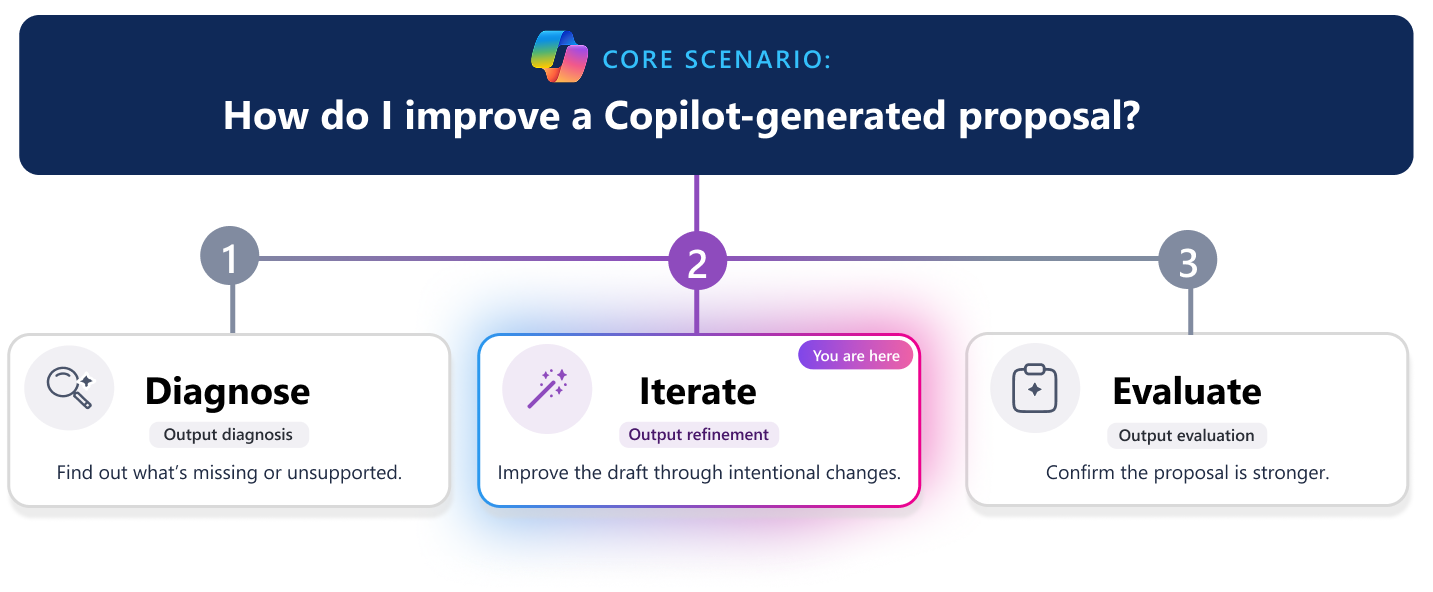
Microsoft Copilot can produce a solid first draft quickly, but a polished draft can still miss the mark. When the output is close but not quite right, iteration helps you improve it without starting over.
In this scenario, you'll strengthen a Copilot-generated proposal by addressing the biggest gaps and making targeted changes to help executive stakeholders evaluate the recommendation.
Scenario: Improve the proposal draft without starting over
You're working with the same proposal for leadership: automating weekly status reporting across multiple teams. The proposal aims to reduce manual effort, improve reporting consistency, and give leaders better visibility into risks and delays through a pilot and broader rollout if successful.
After diagnosing the first draft, you identified the biggest issues:
- The proposal doesn’t clearly explain what leaders are being asked to approve.
- Risks and dependencies, including staffing, adoption, and data consistency, are understated.
- Context about the reporting problem, pilot scope, owners, and timelines is missing or inconsistent.
- Some claims, especially around efficiency gains, are too broad to feel credible.
- Some details might not reflect the latest rollout plan.
The draft is strong enough to build on. Rather than start over, focus on the biggest gap first, improve that section, and preserve what already works. After each revision, check whether the proposal is clearer, more credible, and more useful to leaders deciding whether to fund the project.
How do I improve the proposal draft by iterating?
Use these iteration checks to make focused changes that strengthen the draft: Goal, Audience, Constraints, Evidence, and Structure.

Goal: Refocus the draft on the decision you need
| Before: Copilot draft | After: Revised version |
|---|---|
| “This proposal outlines the scope and objectives of a reporting improvement initiative.” | “This proposal recommends a phased rollout to automate weekly status reporting for four teams so leaders can see risks and delays sooner while reducing the manual work required to prepare updates.” |
| What this draft leaves unclear: It stays general and doesn’t clearly say what decision executive stakeholders need to make. | What improved: The revision names the action, defines the first step, and explains the business value right away. |
Ask Copilot
“Revise the opening so the recommendation, phase-one scope, and executive decision are clear in the first two sentences.”
Audience: Adjust the draft for executive stakeholders
| Before: Copilot draft | After: Revised version |
|---|---|
| “Over time, several teams have used different reporting approaches, and there have been ongoing discussions about process consistency and update quality.” | “Today, teams gather weekly updates manually and use inconsistent formats, making it harder for leaders to spot risks and delays across programs.” |
| What this draft leaves unclear: It spends time on general background instead of quickly framing the business problem. | What improved: The revision gives the executives the context they need without delaying the point. |
Ask Copilot
“Rewrite this for executive stakeholders. Keep only the context that explains the current reporting problem and why it matters now.”
Constraints: Cut to the right length, scope, and format
| Before: Copilot draft | After: Revised version |
|---|---|
| “This proposal includes background on previous reporting discussions, process considerations, multiple future-state options, and several observations from team conversations.” | “This proposal focuses on four points: the current reporting problem, the phase-one pilot, the expected value, and the decision needed now.” |
| What this draft leaves unclear: The section is too broad and doesn’t match the tighter format executives need. | What improved: The revision narrows the scope and makes the content easier to review quickly. |
Ask Copilot
“Tighten this section for executive review. Remove low-value background and keep only what supports the phase-one recommendation.”
Evidence: Add concrete details that support the recommendation
| Before: Copilot draft | After: Revised version |
|---|---|
| “This initiative will create significant efficiency gains and improve cross-team visibility.” | “This initiative would automate weekly status collection for the pilot teams, reduce time spent compiling updates, and give leaders a more consistent view of risks, delays, and owners across the weekly reporting cycle.” |
| What this draft leaves unclear: It promises improvement, but it doesn’t explain what changes or why the claim should feel credible. | What improved: The revision ties the benefit to the actual reporting problem and explains the specific value of automation. |
Ask Copilot
“Make this claim more concrete using the current reporting pain points, pilot scope, and source notes.”
Structure: Reformat the draft so it’s easier to scan and act on
| Before: Copilot draft | After: Revised version |
|---|---|
| “This proposal recommends starting the automation effort in phase one with selected teams, subject to staffing and implementation readiness, and asks leadership to review the recommendation and next.” | Recommendation: Start a phase-one pilot for four teams. Key dependencies: Confirm staffing, reporting inputs, and rollout readiness. Decision needed now: Approve the pilot scope and next-step planning. |
| What this draft leaves unclear: The key points are all present, but they are packed together in a way that makes them harder to scan and act on quickly. | What improved: The revision separates the main points into a format executives can review faster. |
Ask Copilot
“Reformat this as a short executive summary with three bullets: recommendation, key dependencies, and decision needed now.”
Quick readiness checklist
Before moving on, confirm each revision improved one of the five lenses:
✔️ Goal: The draft now supports the decision executives need to make.
✔️ Audience: The tone and level of detail fit executive stakeholders.
✔️ Constraints: The length, scope, and format are controlled.
✔️ Evidence: Claims are concrete and grounded in the reporting scenario.
✔️ Structure: The proposal draft is easy to scan and act on.
If one area is weak, iterate again. A second or third revision is normal. Download the Iterate on Copilot output to get better results quick reference guide, a practical resource you can revisit as you work.
Why iteration matters
A first draft doesn't need to be perfect. When the direction is right, iteration helps you strengthen weak spots, preserve what works, and improve the proposal without starting over.
Tip
Download the Iterate on Copilot output to get better results quick reference guide, a practical resource you can revisit as you work.